

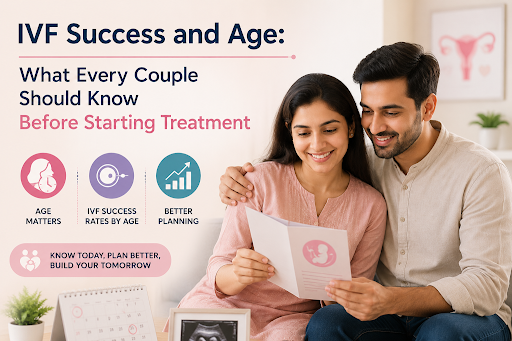
When couples start exploring IVF, one of the biggest questions is: “Does age really affect IVF success?”
The simple answer is yes — age plays a major role in fertility, egg quality, embryo development, and the overall chances of pregnancy.
In India, infertility cases are rising due to lifestyle changes, stress, delayed pregnancies, PCOS, and hormonal disorders. According to Indian fertility estimates, nearly 1 in 6 urban Indian couples faces fertility challenges, and IVF has become one of the most trusted fertility treatments today.
Why Age Matters in IVF
A woman is born with a fixed number of eggs, and both the quantity and quality of eggs decrease with age. As egg quality declines, the chances of successful fertilization and healthy embryo development also reduce.
Medical studies and Indian fertility data consistently show that female age is the single most important factor affecting IVF success rates.
Male age can also affect fertility, though the impact is generally slower compared to women.
IVF Success Rates by Age in India
Indian IVF success rates vary between clinics, technology standards, and patient health conditions. However, recent Indian fertility registry data and leading IVF centers show the following average live birth success rates per cycle:Under 30 Years: Highest IVF Success Rates
Women below 30 usually experience the best IVF outcomes because egg quality and ovarian reserve are naturally stronger.
Key Advantages
- Better embryo quality
- Higher implantation success
- Lower miscarriage risk
- Fewer IVF cycles needed
Indian fertility centers report success rates of nearly 60–70% per embryo transfer in this age group.
Age 30 to 35: Strong Fertility Window
This age group still has very positive IVF outcomes and responds well to fertility medications.
Typical IVF Outcomes
- Strong ovarian response
- Healthy embryo development
- Higher cumulative pregnancy chances
Most Indian couples in this category achieve pregnancy within 1–2 IVF cycles.
Age 35 to 40: Fertility Decline Becomes Noticeable
After 35, fertility starts declining more rapidly. Egg quality reduces, and the risk of chromosomal abnormalities increases.
Common Challenges
- Lower implantation rates
- Increased miscarriage risk
- Multiple IVF cycles may be needed
- Reduced ovarian reserve
Indian IVF data shows success rates may drop to around 35–45% by age 37 and even lower after 38.
Doctors often recommend:
- Blastocyst transfer
- Genetic embryo testing (PGT)
- Early fertility consultation
Above 40 Years: IVF Is Still Possible, But More Challenging
After 40, IVF success rates decline significantly with self-eggs due to reduced egg quality and ovarian reserve.
Indian IVF Statistics After 40
- Success rates may fall to 10–20% per cycle
- Many couples may require donor egg IVF
- Pregnancy complications become more common
However, modern fertility technology and personalized IVF protocols continue to improve outcomes for women in this age group.
Important IVF Statistics Indian Couples Should Know
IVF Industry Growth in India
India has become one of the fastest-growing fertility treatment destinations globally.
- India now has 2,000+ registered fertility clinics
- More than 280,000 IVF cycles are performed annually across registered clinics
- IVF demand is increasing rapidly in metro cities like Ahmedabad, Mumbai, Delhi, Bangalore, and Hyderabad
Success Rates Improve with Multiple Cycles
Many couples conceive after more than one IVF attempt.
Research and fertility experts suggest:
- Success rates increase significantly after 2–3 IVF cycles
- Cumulative pregnancy chances can cross 60–70% in younger women
Other Factors That Affect IVF Success
Age is important, but IVF success also depends on:
- Sperm quality
- Uterine health
- Lifestyle habits
- PCOS or thyroid conditions
- Stress levels
- Embryo quality
- Clinic expertise and lab technology
Experts say that advanced embryology labs and experienced fertility specialists can significantly improve success rates.
How Indian Couples Can Improve IVF Success Chances
Start Fertility Evaluation Early
Many Indian couples delay fertility consultation for years. Early diagnosis often improves treatment outcomes.
Maintain a Healthy Lifestyle
- Eat a balanced diet
- Exercise regularly
- Avoid smoking and alcohol
- Sleep properly
- Maintain healthy weight
Choose the Right IVF Center
Look for:
- ICMR-registered clinics
- Experienced embryologists
- Transparent success rate reporting
- Advanced lab infrastructure
Consider Fertility Preservation
Egg freezing is becoming increasingly popular among working women in India who wish to delay pregnancy.
Emotional Preparation Is Equally Important
IVF treatment is not only physical — it is emotional too.
Couples should prepare for:
- Hormonal changes
- Multiple clinic visits
- Financial planning
- Emotional stress
- Possible repeated cycles
Having family support, counseling, and realistic expectations can make the IVF journey easier.
Age has a direct impact on IVF success, but it does not decide the outcome alone. With timely treatment, proper medical guidance, healthy lifestyle choices, and advanced fertility care, many Indian couples achieve successful pregnancies through IVF.
The most important step is not delaying fertility evaluation. Early consultation can improve treatment options, reduce emotional stress, and increase the chances of parenthood.
As highlighted by Jananam Fertility Centre, successful fertility treatment is not just about advanced technology but also about personalized care, ethical treatment practices, and emotional support throughout the IVF journey. Modern fertility centers in India are combining advanced IVF technologies, clean-room embryology labs, fertility preservation techniques, and patient-centered care to improve success rates across different age groups. Clinics like Jananam Fertility Centre focus on individualized treatment plans, transparency, compassionate support, and long-term fertility wellness, helping couples move forward with greater confidence and hope during one of the most important phases of their lives.
- By admin-janam